
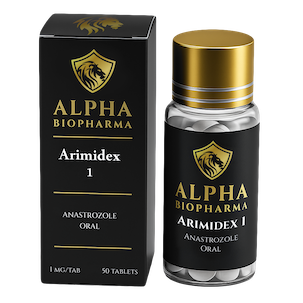
Description
Composition
Each tablet contains:
- Anastrozole – 1 mg
- Excipients – q.s.
Pharmacological Effects
- Aromatase Inhibitor (AI): Non-Steroidal, Reversible (Type II).
- Primary Action: Competitively binds to the aromatase enzyme, blocking the conversion of androgens (testosterone, androstenedione) into estrogen (estradiol).
- Result: Reduces circulating estrogen levels by 50–70% (dose-dependent).
Indications
- Adjuvant treatment of Estrogen-Receptor-Positive (ER+) breast cancer in postmenopausal women.
- Prevention of breast cancer recurrence.
- Estrogen control in testosterone/anabolic steroid cycles (prevents gynecomastia, water retention).
- Post-Cycle Therapy (PCT) – sometimes used alongside SERMs (e.g., Clomid, Nolvadex).
Recommended Dose
- Breast Cancer: 1 mg once daily (oral, with or without food).
- TRT/Steroid Cycle Use: 0.25–0.5 mg every other day (adjust based on bloodwork).
- Low-Dose TRT (100–200 mg/week testosterone): Often 0.25 mg twice weekly is sufficient.
- High-Dose Cycles (500+ mg/week testosterone): May require 0.5 mg every other day or 1 mg EOD (varies by individual).
- Note: Do NOT crush tablets (can alter absorption).
Side Effects
- Common: Low estrogen symptoms (joint pain, dry skin, reduced libido, mood swings), hot flashes, mild fatigue or headaches.
- Serious (rare but possible): Osteoporosis (long-term use without proper hormone balance), cardiovascular risks (due to low estrogen), elevated liver enzymes, depression/anxiety from crashed estrogen.
Contraindication
- Premenopausal women (can cause ovarian hyperstimulation).
- Pregnancy/lactation (estrogen suppression harms fetal development).
- Severe liver/kidney disease.
- Allergy to Exemestane or other AIs (e.g., Anastrozole, Letrozole).
Storage Conditions
- Store at room temperature (20–25°C / 68–77°F).
- Protect from moisture and light (keep in original packaging).
- Do not use if discolored or crumbled.
Disclaimer: Always follow your healthcare provider’s advice regarding storage and use, especially when dealing with compounds that have limited clinical data.
Reviews
There are no reviews yet.