How to Verify an Alpha BioPharma Product

Authenticity should be checked before you rely on a product label, reseller listing or laboratory report. Alpha BioPharma provides several independent checks that can be used together: the product verification code, the authorized-reseller list and the published laboratory results.

Start with the product verification code

Use the unique code printed on the product packaging in the Alpha BioPharma Product Verification System. Enter the code exactly as printed, including any letters and numbers. A successful result confirms that the code is recognized by the verification system.

A code result is one part of the check. Packaging should also be intact and product details should match the information shown on the relevant product page. If a code is rejected, appears to have been used unexpectedly or the packaging looks inconsistent, do not rely on the product and contact Alpha BioPharma support.

Check whether the seller is authorized

Products obtained through an unknown marketplace or an unverified seller carry a higher authenticity risk. Before purchasing, compare the seller with the current authorized reseller list. If the seller is not listed, ask Alpha BioPharma to confirm the relationship before proceeding.

Compare the batch with available laboratory results

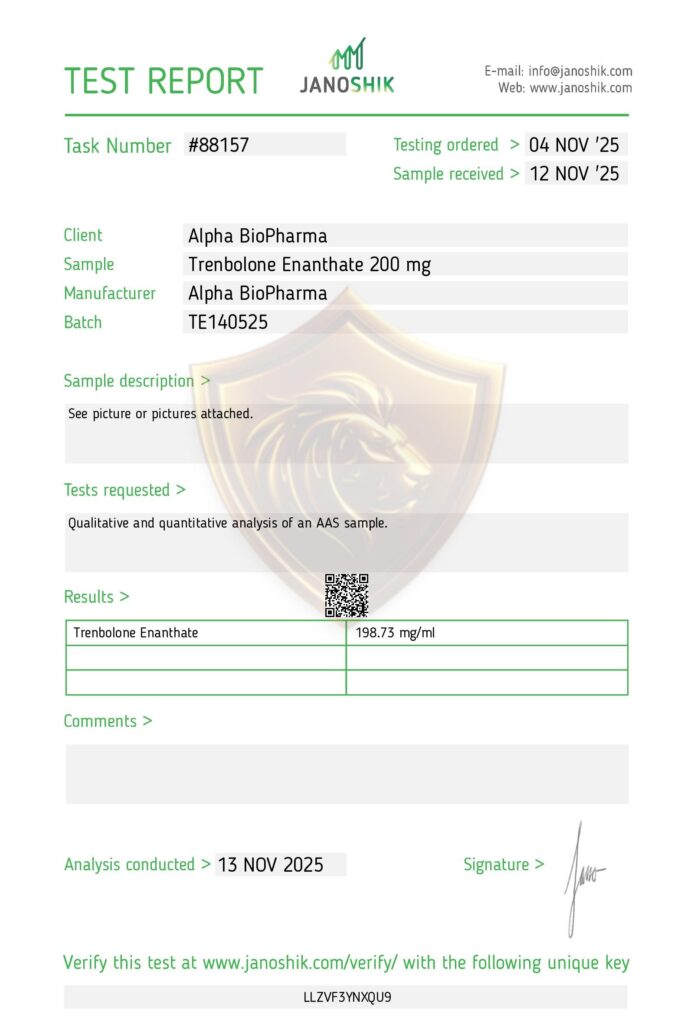
Visit the independent lab results overview and look for the relevant product and batch. A useful laboratory report should identify what was tested and show enough report information to allow an independent check. Where a third-party verification link, report number, QR code or verification key is provided, use it on the laboratory’s own website.

Laboratory results are batch-specific snapshots. They should not be treated as a general guarantee for every product or every future batch. Match the product name, batch information and report details carefully.

A practical four-step authenticity check

  1. Verify the code: enter the packaging code in the official verification system.
  2. Verify the seller: confirm that the source appears on the authorized-reseller page.
  3. Verify the report: compare the relevant batch with the published lab result and, where possible, verify the report with the independent laboratory.
  4. Escalate inconsistencies: retain clear photographs of the packaging, code and batch information and send them through the official contact channel.

What Alpha BioPharma can verify

The support team can help check whether a code is recognized, whether a seller is listed as an authorized partner and whether a published laboratory report corresponds with the information shown on the site. Support cannot confirm the history of a product that has been repackaged, opened or obtained through an unknown third party.

Frequently asked questions

Where do I verify an Alpha BioPharma product?

Use the official Product Verification System on alphabiopharma.info and enter the code exactly as printed on the packaging.

Does a valid code prove that every product detail is correct?

A recognized code is an important authenticity signal, but it should be combined with seller verification, intact packaging and—where available—a matching batch laboratory report.

How can I verify a laboratory report?

Open the relevant result from the Lab Tests page. If the report includes a third-party verification method, use the report number, key or QR code on the laboratory’s official website.

What should I do if verification fails?

Do not rely on the product. Keep the packaging and take clear photos of the code, batch information and seller details. Then contact Alpha BioPharma for review.

Where can I find official products?

Start with the Alpha BioPharma product catalogue and consult the authorized reseller list before choosing a seller.

Next step: view Alpha BioPharma products, then confirm authenticity through the verification and lab-test resources linked above.

Continue with the complete quality-verification framework

This article provides the practical code-checking steps. For the wider framework—covering the limits of verification codes, batch traceability, laboratory evidence, packaging checks and reseller validation—read Alpha BioPharma Product Authentication and Quality Verification.

You can also review why batch testing and product traceability matter and how to identify an official reseller.

Alpha BioPharma | The new standard in steroids and peptides

At Alpha BioPharma, we’re proud to announce our expansion into new partnerships and markets. As part of our ongoing commitment to innovation, quality, and transparency, we are officially taking over from Dutch Pharma as the preferred supplier of premium Alpha BioPharma anabolics and performance-enhancing products.

This transition marks a major step forward — offering athletes, professionals, and wellness enthusiasts an even higher level of reliability, safety, and effectiveness.

Why choose Alpha BioPharma?

Unique selling points:

1. Superior pharmaceutical quality

Alpha BioPharma focuses on consistent specifications, clear product information and batch-level quality control. Where independent laboratory results are available, they can be reviewed through the Alpha BioPharma Lab Tests overview.

2. Professional presentation

Our packaging reflects the professionalism behind our brand — clean, consistent, and clearly labeled. Each product comes with a detailed label that provides full transparency and builds trust with every order, ensuring clarity and safety for every customer.

3. Expanded product range

We’ve broadened the selection to better serve your individual needs. Alpha BioPharma now offers a comprehensive range of injectables, oral compounds, peptides, and support medications — ensuring you have all the essentials for a complete and effective cycle.

4. Verified authenticity

Alpha BioPharma packaging includes a product verification code. Enter the code in the official Product Verification System and combine the result with the packaging, batch information and the authorized reseller list. Read the full product verification guide for the complete check.

5. Independent lab testing

To strengthen our commitment to transparency, popular products are independently analyzed by Janoshik Laboratory. This third-party testing provides our customers with reliable data and enhanced confidence in product integrity.

Product and packaging updates

CategoryChangeWhat this means for you
InjectablesVials are now standardized to 10 ml (previously 12 ml)Some remaining Dutch Pharma products may still be supplied in 12 ml until existing stock is depleted.
OralsRepackaged in glass vials instead of plastic pouchesImproved durability and clearer visibility of remaining contents.
PeptidesNow feature clearly printed labelsImmediate identification and greater clarity of product details.
Support medicationsExpanded lineup including Femara, Aromasin, Finasteride, T4, Cabergoline, Telmisartan, and moreMore options for hormonal and cardiovascular support during cycles.
Laboratory testingOngoing collaboration with Janoshik LaboratoryContinuous verification for quality, potency, and purity.

Please note: During this transition period, you may still receive products in Dutch Pharma packaging or peptide vials without updated labels until all existing stock is replaced.

What this transition means for you

With Dutch Pharma’s transition to Alpha BioPharma, customers can expect the same reliability and service they’ve come to trust — now elevated by improved product quality, advanced packaging, and a wider range of choices.

This change underscores our core promise: To provide pharmaceutical-grade products backed by science, transparency, and integrity.

We’re excited to continue building trust with our customers through innovation, verified quality, and unmatched professionalism.

Have questions?

If you have any questions about product availability, packaging updates, or the transition process, our customer support team is here to assist you.

📩 Contact us directly via WhatsApp or email for quick and personalized support.

Alpha BioPharma – precision. purity. performance.

Frequently asked questions (FAQ) about Alpha BioPharma

1. Why did the transition from Dutch Pharma to Alpha BioPharma happen?

The transition was made to raise the standard of product quality, transparency, and customer trust. Alpha BioPharma uses more advanced manufacturing processes, premium-grade carrier oils, and verified testing protocols, ensuring greater consistency and reliability in every product.

2. Are Alpha BioPharma anabolics higher quality than Dutch Pharma products?

A blanket quality comparison cannot be made from a brand name alone. Compare the published product specifications, packaging and available batch laboratory reports. Independent reports should be interpreted according to the product, batch and analytical method shown.

3. How can I verify that my Alpha BioPharma product is authentic?

Every Alpha BioPharma product has a unique QR code printed on the label. Use the code with the official verification system. A recognized code is an important signal, but it should be combined with intact packaging, matching batch details and seller verification.

4. Will I still receive Dutch Pharma packaging during the transition?

Possibly. During the final phase of the transition, you may still receive products in Dutch Pharma packaging or peptides without updated labels. Once existing stock runs out, only Alpha BioPharma-branded products will be shipped.

5. What new products are available from Alpha BioPharma?

Alpha BioPharma has expanded its product range to include new injectables, orals, peptides, and support medications like Femara, Aromasin, Finasteride, T4, Cabergoline, and Telmisartan. This broader lineup helps customers find all essential cycle-support solutions in one place.

6. Are Alpha BioPharma products tested for safety and effectiveness?

Published independent laboratory reports may provide measured information such as identity, quantity, purity or related analytical parameters, depending on the report. A laboratory result does not by itself establish clinical safety or effectiveness. Review the relevant product and batch report.

7. How should I store Alpha BioPharma products?

Products should be stored in a cool, dry place away from direct sunlight and heat. Ensure vials remain sealed until use, and check the product label for specific storage instructions — especially for peptides and other sensitive compounds.

8. Where can I buy genuine Alpha BioPharma anabolics?

Genuine Alpha BioPharma products are available exclusively through verified distributors and partners listed on our official website: Alpha BioPharma authorized resellers. Always verify your product through the QR code system to ensure authenticity.

9. What should I do if I have questions about my order or product details?

Our customer support team is available via WhatsApp and email to assist with any questions about product verification, packaging updates, or orders. We’re dedicated to helping customers receive the best support possible — fast, friendly, and reliable.

10. What makes Alpha BioPharma different from other anabolic brands?

Alpha BioPharma emphasizes identifiable products, published specifications, product-code verification and independent batch testing where available. Visitors can compare the current product catalogue, lab results and authorized partners directly.

Comparison of Carrier Oils for Injections

Editorial note: interpreting carrier-oil information

Carrier oils are formulation excipients, not interchangeable do-it-yourself ingredients. The suitability of an oil depends on the complete finished formulation, manufacturing controls, sterility, route of administration and individual allergy risk. Do not use this overview as instructions to prepare or modify an injectable product. The FDA maintains an Inactive Ingredients Database that can be used as a regulatory reference for excipients used in approved drug products.

For Alpha BioPharma-specific information, compare the product catalogue with the available independent batch laboratory results. Laboratory reports should be interpreted only for the product and batch shown.

Introduction

Choosing the right carrier oil for injections is a crucial step for anyone considering injectable steroids or other medicinal applications. Carrier oils, such as the appropriate carrier oils, help transport the active ingredient into a solution. They ensure that it can be administered safely and effectively. In this article, we discuss the most commonly used carrier oils and provide insight into which may be the best choice, depending on your specific needs.

Why Choosing the Right Carrier Oil Is Important

The importance of choosing the right carrier oil cannot be overstated. The carrier oil affects not only the effectiveness of the injection but also its safety. An incorrect choice can lead to unwanted side effects or reduced potency of the active ingredient. Understanding the properties of different oils helps in making an informed choice.

Applications of Carrier Oils in Medicine

Carrier oils are widely used in medicine, not only for steroids but also for other injectable medications. They play a significant role in the pharmacokinetics of drugs, which influences the speed and extent of absorption into the body. Using the right carrier oil can make all the difference in the effectiveness of a treatment.

Factors That Influence the Choice of Carrier Oils

Several factors must be considered when choosing a carrier oil. These include the oil's viscosity, stability, allergenicity, and absorption rate. Personal preference and budget can also play a role. It is crucial to carefully evaluate these factors to choose the most suitable oil for your needs.

What are Carrier Oils?

Carrier oils are plant oils used to dilute and stabilize active ingredients. They are important in the pharmaceutical and cosmetic industries for their ability to facilitate the absorption of active ingredients into the body. With injectable steroids, carrier oils play a crucial role in the effectiveness and safety of the injection.

Properties of Carrier Oils

Carrier oils have unique properties that make them suitable for various applications. They are typically odorless and tasteless, ideal for medicinal purposes. Furthermore, they are often rich in fatty acids, which contribute to their stability and absorption capacity. These properties make them an essential ingredient in many pharmaceutical formulations.

Different Types of Carrier Oils

A wide variety of carrier oils are available, each with its own unique properties and benefits. Commonly used oils include coconut oil, almond oil, and avocado oil. Each type of oil has its own specific uses and benefits, depending on the desired properties and the active ingredient to be administered.

Historical Uses of Carrier Oils

Carrier oils have a long history of use in medicine and cosmetics. In ancient civilizations, they were often used as the base for ointments and tinctures. Their ability to stabilize and transport other substances has maintained their popularity throughout the centuries. Today, they remain an essential component of modern pharmaceutical technology. Important Characteristics of Carrier Oils

When choosing a carrier oil, there are several factors to consider:

Viscosity

This refers to the thickness of the oil. A lower viscosity means the oil is thinner and easier to inject. Low viscosity is especially important for injections, as it can reduce pain and discomfort for the patient. It can also affect the speed of administration, which is important for the effectiveness of the treatment.

Stability
The chemical stability of the oil determines how well it resists oxidation and spoilage. A stable oil extends the shelf life of the solution and prevents unwanted chemical reactions. This is crucial for the safety and effectiveness of the medication, as unstable oils can affect the action of the active ingredients.

Allergenicity

Some oils can cause allergic reactions. It is important to choose an oil that is hypoallergenic, especially for people with sensitive skin. Allergic reactions can range from mild irritation to severe anaphylactic reactions, so avoiding allergenic oils is essential for patient safety.

Absorption Rate

This determines how quickly the active ingredient is absorbed into the bloodstream. Fast absorption may be desirable for acute treatments, while slower absorption may be appropriate for long-term therapies. The absorption rate can be influenced by the consistency and composition of the oil. It is important to consider this when choosing a carrier oil.

Commonly Used Carrier Oils for Injections

MCT Oil

MCT (Medium Chain Triglycerides) oil is a popular choice due to its low viscosity and rapid absorption. It is derived from coconut oil and palm oil and is known for its clear color and neutral odor.

Benefits of MCT Oil


MCT oil is easy to inject thanks to its low viscosity. It is also less likely to trigger allergic reactions. Furthermore, it has a neutral odor and taste, making it ideal for medicinal applications. The rapid absorption of MCT oil makes it effective for acute treatments.

Disadvantages of MCT Oil


MCT oil can be more expensive than other oils and may not be suitable for everyone. Some people may be sensitive to the ingredients, and the cost can be a limiting factor for long-term use. Furthermore, the source of the oil, such as palm oil, can raise concerns about sustainability and environmental impact.

Suitability of MCT Oil for Different Applications


MCT oil is particularly suitable for applications that require rapid absorption. It is often used in sports medicine and acute medical treatments. However, for applications requiring sustained release, an oil with a higher viscosity may be more suitable.

Sesame Oil


Sesame oil is another commonly used carrier oil known for its stability and nourishing properties. It is often used in Asian cuisine but also has applications in the pharmaceutical industry.

Benefits of Sesame Oil


Sesame oil has high stability and is relatively inexpensive. It is also rich in antioxidants, which contribute to healthy skin and the immune system. The rich nutrients in sesame oil make it a popular choice for both medicinal and cosmetic applications.

Disadvantages of Sesame Oil


Some people may be allergic to sesame oil. It is also thicker than MCT oil, which can make injection more difficult. The higher viscosity can lead to increased discomfort during injection and slower absorption of the active ingredient.

Uses of Sesame Oil in Medicine


Sesame oil is often used in traditional medicine and modern pharmaceutical applications. It is ideal for long-term therapies where a stable and nourishing carrier oil is required. While not suitable for everyone, it remains a popular choice due to its versatility and benefits.

Grapeseed Oil


Grapeseed oil is light and has a low viscosity, making it a good choice for injections. It is rich in vitamin E and antioxidants, making it a healthy choice as well.

Benefits of Grapeseed Oil


Grapeseed oil is hypoallergenic and has a light texture, making it easier to inject. The rich presence of antioxidants supports skin health and helps fight free radicals. Furthermore, its neutral odor is an advantage for medicinal applications.

Disadvantages of Grapeseed Oil


It can be more expensive than other oils and is not as stable as sesame oil. The higher cost can be a problem for those on a budget, and the lower stability can affect the shelf life of the solution. This makes it less ideal for long-term storage and use.

Grapeseed Oil's Suitability for Various Treatments


Grapeseed oil is ideal for applications requiring a light and quickly absorbed oil. It is suitable for both cosmetic and medicinal purposes, especially when a hypoallergenic option is required. While it is not as stable as some other oils, its health benefits make it an attractive choice for many users.

Best Carrier Oil for Injectable Steroids


When choosing the best carrier oil for injectable steroids, it's important to consider both the oil's properties and your personal needs. MCT oil is often popular because it's thin and quickly absorbed. However, if cost is a concern, sesame oil can be a good choice.

Considerations When Choosing a Carrier Oil


When choosing a carrier oil for steroids, several factors should be considered. The speed of absorption, potential allergic reactions, and cost are crucial. It's essential to evaluate your own medical history and any allergies you may have to choose the most suitable oil.

Comparing MCT Oil, Sesame Oil, and Grapeseed Oil


Each of these oils has unique advantages and disadvantages. MCT oil offers rapid absorption, while sesame oil offers stability at a lower cost. Grapeseed oil is hypoallergenic and offers health benefits, but may be more expensive. A detailed comparison can help you make an informed choice.

Recommendations for Specific Users


Depending on your specific needs and medical history, certain oils may be more suitable. For those with allergies, grapeseed oil or MCT oil may be better, while sesame oil can be a budget-friendly option for others. Always consult a medical professional to determine the best choice for your situation.

Conclusion


Choosing the right carrier oil can make a significant difference in the effectiveness and safety of injectable steroids. MCT oil, sesame oil, and grapeseed oil are all popular choices, each with their own advantages and disadvantages. It's important to consider your own needs and any allergies when making a decision.

The Importance of Expert Advice


When in doubt, it's always advisable to consult an expert, such as a doctor or pharmacist, to ensure you make the best choice for your specific situation. Experts can evaluate your medical history and make recommendations based on your unique needs and circumstances.

Future Developments in Carrier Oils


The world of carrier oils is constantly evolving, with new research leading to the development of innovative solutions. It's important to stay informed about the latest developments and how they may impact your choices. Future discoveries may lead to even more effective and safe options for injectable applications.

Ensuring Your Health and Safety


Understanding the properties of different carrier oils can help you make an informed decision and ensure your health and safety. Choose the right oil. Take the appropriate precautions. This will help maximize the effectiveness of your treatments and reduce risks.

Additional Considerations


Hygiene is important when using carrier oils. You should also pay attention to oil storage. Ensure the oil is stored in a clean, dry environment and that the bottle is tightly sealed to prevent oxidation. Always check the expiration date and do not use oil that has gone rancid.

Hygiene Practices for Carrier Oils


Hygiene is paramount when using carrier oils, especially in medical applications. Always use clean and sterile instruments to prevent contamination. Following strict hygiene practices can help ensure the safety and effectiveness of treatments.

Storage Guidelines for Carrier Oils


Proper storage of carrier oils is essential to maintain their quality and effectiveness. Store oils in a cool, dark place to prevent oxidation and spoilage. Ensure bottles are tightly sealed to minimize air exposure, which prolongs shelf life.

Maximum Effectiveness and Minimal Side Effects


By choosing the right carrier oil and using it correctly, you can maximize the effectiveness of your injections and minimize potential side effects. It's important to be well-informed about best practices. Regularly evaluate your choices. This will help you achieve the best results.