 Aug 18, 2026
 By Hanky
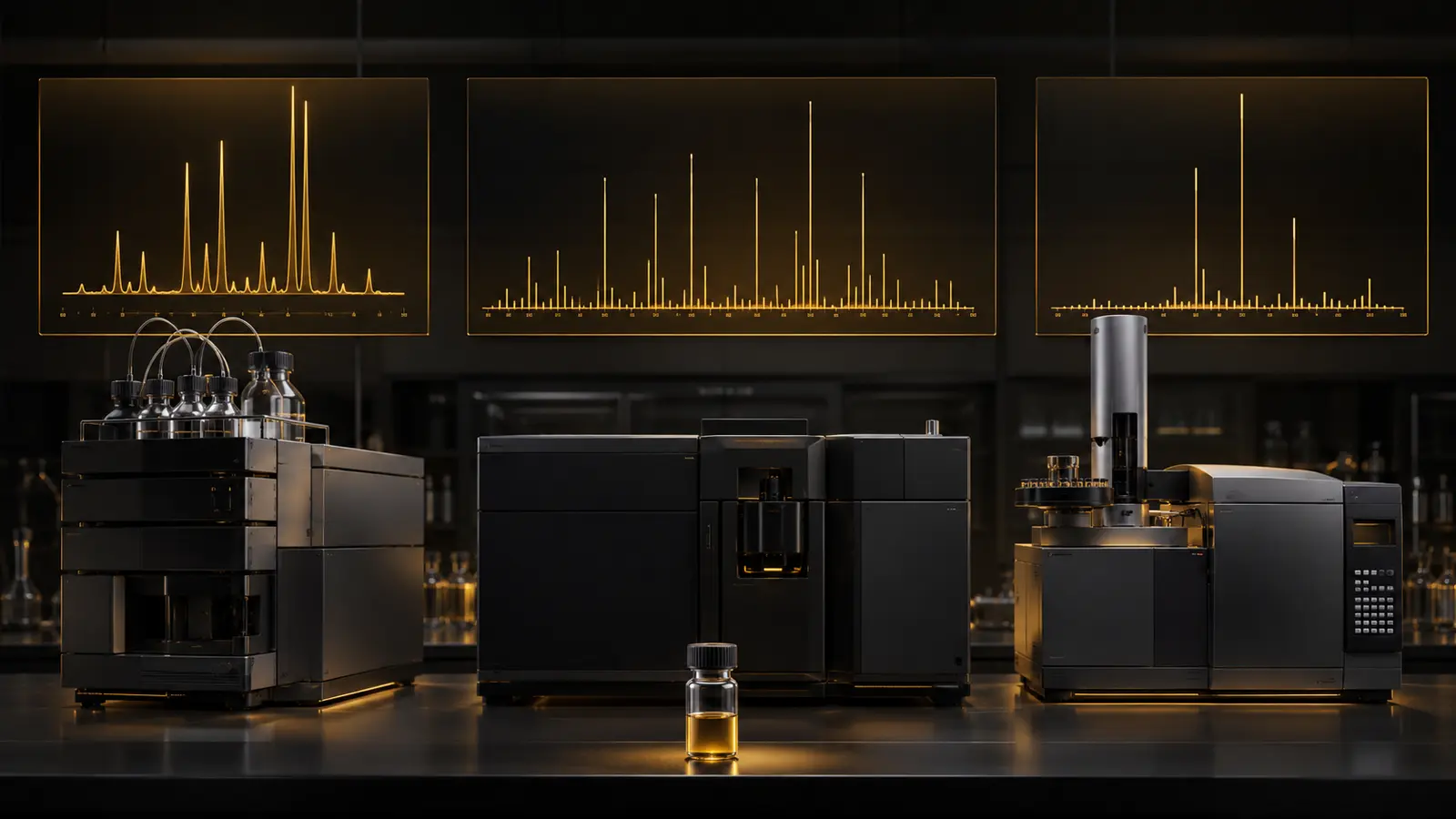
Analytical method names are often used as shorthand for “lab tested,” but the method determines what can reasonably be concluded. HPLC, LC-MS and GC-MS each combine different separation and detection principles.
High-performance liquid chromatography separates components as they move through a column. Depending on the detector, reference materials and calibration, HPLC can support purity profiling and quantitative content analysis. Retention time alone is usually weaker identity evidence than an orthogonal method.
Liquid chromatography–mass spectrometry combines chromatographic separation with mass-based detection. It can provide molecular-mass information and is often useful for peptide identity and complex mixtures. The exact strength of the conclusion depends on instrument configuration and method design.
Gas chromatography–mass spectrometry separates volatile compounds, or compounds prepared to be suitable for gas chromatography, before mass detection. It is widely used in forensic and pharmaceutical analysis of suitable small molecules.
| Method | Typical strength | Important limitation |
|---|---|---|
| HPLC | Separation, profiling and quantification | Conclusion depends on detector, standards and calibration |
| LC-MS | Molecular identity plus separation | Does not automatically quantify without a suitable method |
| GC-MS | Strong analysis of suitable volatile/derivatized compounds | Not every compound is directly suitable |
Orthogonal methods examine a sample using different measurement principles. That can improve confidence in identity and composition, but each listed result must still be interpreted within its scope.
A chemical identity or assay result does not itself demonstrate sterility, low endotoxin levels, acceptable microbial quality or absence of all contaminants.
Use this article with the independent testing pillar and our report-reading checklist.
There is no universal best method. It depends on the compound and analytical question.
No. Quantification requires suitable standards, calibration and validation.
No. A chromatographic peak may require additional analytical work for identification.